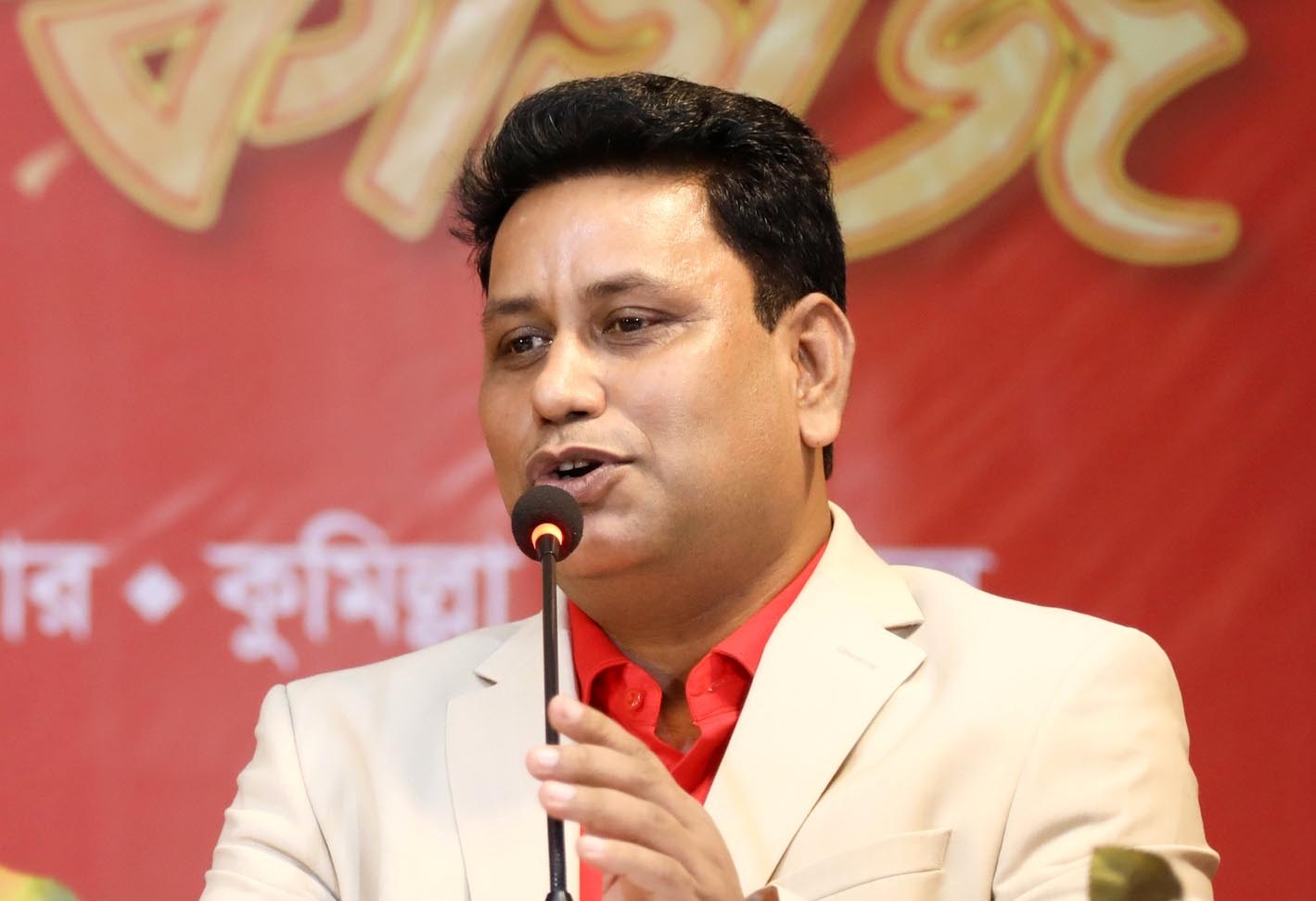
Newspapers are considered a major medium of information and entertainment both at home and abroad. In our country, local journalism and newspapers have proudly survived with much sacrifice and bright examples.
Abul Kashem Hridoy (Mohammad Abul Kashem) of Cumilla is one of the journalists and editors who have introduced a new trend in the field of journalism and newspapers outside Dhaka and have gained widespread readership and acceptance. Locally, Abul Kashem Hridoy is acclaimed as a brave journalist and editor.
He has created a new history of newspapers by focusing on local political news rather than national headlines. Not only that, he has played a significant role in creating a mentality among regional newspaper-averse readers to read local papers. His newspaper, Dainik Cumillar Kagoj, has become a center of interest for a large number of readers. Its news treatment, modern and catchy headlines, setup, and getup are all new, distinct, and eye-catching. Following Dainik Cumillar Kagoj, several new newspapers were launched, and all the old newspapers also adopted the style of Cumillar Kagoj and became popular with readers. This is a rare phenomenon in journalism outside Dhaka. Despite being a regional newspaper, Dainik Cumillar Kagoj has reached the peak of popularity by publishing extraordinarily courageous news from time to time.
From 2004, printing in four colors on offset paper was financially very risky, but Abul Kashem Hridoy was successful in it. The history of Cumilla in the newspaper industry is very distinct and bright. Cumillar Kagoj is a new addition to that tradition, with new features and a new history. For this, Cumillar Kagoj is undoubtedly a pioneer. Its success is not limited to being a newspaper; Cumillar Kagoj also has a different role in the social and cultural arena. It has organized large-scale events on various days including Pohela Boishakh and Victory Day. Through huge events, it gives reception to meritorious students. Besides, it has been rewarding the country's prominent personalities for their special contributions in five fields every year.
The brave young man Abul Kashem Hridoy is not limited to Cumillar Kagoj. He has become widely discussed for his courageous investigative reports in national dailies Janakantha, Kaler Kantho, and Channel i. For these brave reports, he has been attacked several times. He has been harassed in various ways. He has been subjected to harassment with false cases. But his progress has not stopped. He is driven by courage and a dream of a beautiful future.
After his SSC examination in 1992, Abul Kashem Hridoy started his journalism career by writing poems, news, and features in a local newspaper. It started with a news report about the struggle of a defeated woman in life titled 'Naichcha Khan Badam, Gaiyya Khan Badam'. It was published in 'Saptahik Nirikshan'. After that, he worked for 'Dainik Cumilla Barta' for some time. After a short break for the HSC examination, he joined 'Saptahik Abhibadan'. At that time, he supervised all the work of the newspaper, including reporting, editing, pasting, printing in the press, and putting tickets on the newspaper. In 1997, he joined the ancient weekly newspaper 'Saptahik Amode'. At that time, some of his reports were widely discussed. In 1998, he joined 'Dainik Ruposhi Bangla' as a departmental editor. He edited pages related to sports, culture, history, and women. For various reasons, he was laid off and rehired several times at the newspaper. During this time, he passed BA Honors (Bengali) and MA from Cumilla Victoria College. In 1999, he joined Dainik Janakantha as its correspondent in Cumilla. In 2001, an investigative report written in the collaborator column created a huge stir. Cumilla became vocal with the movement against war crimes and the demand for the trial of war criminals. He was harassed in various ways, including lawsuits. Hundreds of freedom fighters marched to the court with Abul Kashem Hridoy. The freedom fighters of Cumilla played a strong role in demanding the trial of war criminals.
An investigative report on fatwas published in Dainik Janakantha created a nationwide stir. Women leaders held rallies in Dhaka and Cumilla. Distinguished women leaders, including Dr. Nilima Ibrahim, and women from Dhaka held rallies. Numerous women and women leaders from Dhaka came to Cumilla to hold rallies and protest against the fatwas. The fatwa perpetrators were arrested and faced justice.
Hridoy joined Channel i as the Cumilla correspondent from the very first day of its news broadcast. In October 2004, he published the regional weekly newspaper 'Cumillar Kagoj' under his editorship. It gave the highest priority to political news. The colorful, modern, and bright paper Cumillar Kagoj would reach readers every Tuesday with sensational news. He showed extraordinary courage in publishing political news every week. He became popular by bringing the behind-the-scenes news to the newspaper's pages. Following the uniqueness and popularity of Cumillar Kagoj's news publication, all the old regional weeklies began to be published in the style of Cumillar Kagoj.
In December 2005, an investigative report on the training of Jama'atul Mujahideen Bangladesh (JMB) militants in 9 mosques in Cumilla was broadcast as the lead news on Channel i, which created a huge stir nationwide. Law enforcement agencies became more active in the anti-militancy campaign. The way Abul Kashem Hridoy covered the news of the JMB militant-RAB gunfight in Kaliyajuri, Cumilla, on March 13, 2006, where 4 people including militant leader Molla Omar were killed, and JMB chief Sheikh Abdur Rahman's son Nabil Rahman was arrested, was widely acclaimed by the audience and readers. Especially when all the senior reporters of the electronic media in Dhaka were covering the report, Channel i was the only exception. Only Channel i broadcasted the report as the main report first.
On September 16, 2005, while making an investigative report, Abul Kashem Hridoy was taken hostage. Later, journalists and police members rescued him. After that, he was attacked on September 14, 2006. A group of thugs severely injured him by beating him in Debidwar, Cumilla. In protest of this incident, the angry journalists of Cumilla held a rally.
On October 22, 2006, the weekly Cumillar Kagoj was converted into a daily. The newspaper industry fell into a disaster after 'one-eleven', and Cumillar Kagoj was also a victim. Although the attempt to deliver the color Cumillar Kagoj to readers seven days a week was hindered, readers were getting their favorite color daily Cumillar Kagoj on Tuesdays. At the same time, efforts were being made to make the black-and-white Cumillar Kagoj popular for the remaining 6 days. Within a few days, the daily color Cumillar Kagoj started reaching readers every day. Cumillar Kagoj moved forward with sky-high popularity. Dainik Cumillar Kagoj has maintained this success for 20 years.
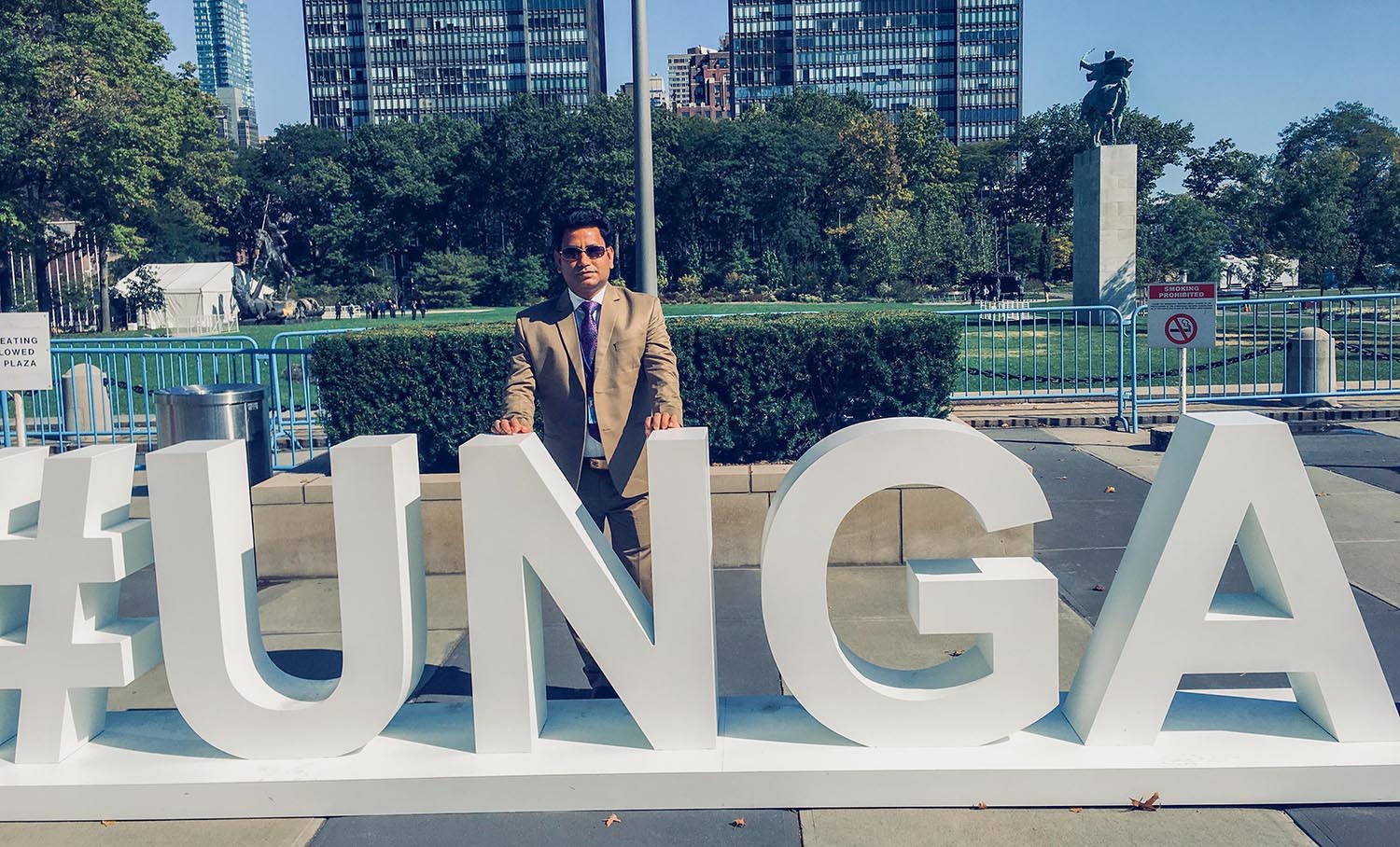
The editor of the newspaper, Abul Kashem Hridoy, has now joined international journalism, going beyond the boundaries of local and national journalism. In September 2019, he participated as a journalist in the United Nations General Assembly in America, in the UN Climate Change Conference in Morocco in 2016, and in the UN Climate Change Conference in France in 2015. In 2017, he went on a state bilateral visit to Sweden and in 2020, he went on a state visit to Italy. He has also traveled to various countries including Britain, Germany, Denmark, Holland, Switzerland, United Arab Emirates, Malaysia, India, Qatar, and Turkey.
Besides journalism, he is also a social worker. He has played a leading role in movements such as the Cumilla division movement, the reopening of the airport, and the demand for a direct railway line between Dhaka and Cumilla, as well as fighting on various local issues. During the outbreak of the deadly coronavirus, he provided ambulance and oxygen services to local people. After the fighter jet crash at Milestone School and College, he collected blood from great donors and sent it to the hospital on an emergency basis for the treatment of the injured.
Abul Kashem Hridoy has made significant contributions to the research and writing on the history, society, and culture of Bangladesh. He is the author of many recognized books, which include Cumillay Bangabandhu (Cumillar Kagoj Prokashoni, 2018), based on the life and contributions of the Father of the Nation, Bangabandhu Sheikh Mujibur Rahman. Also, the book Cumilla Cantonmenter Itihas (Cumillar Kagoj Prokashoni, 2018) presents a detailed analysis of the historical importance of Cumilla Cantonment. His earlier book Mukti Sangrame Cumilla (Kashban Mudrayan, Dhaka, 2000) provides in-depth research on the role of Cumilla in the Liberation War, and Operation Kill and Burn (Cumillar Kagoj Prokashoni, 2015) describes the unknown events of 1971.
Besides books, Hridoy has written articles and stories on human rights, fatwa-related issues, economic and social development, the eradication of marital superstitions, and non-formal education. His writings have been published in various national dailies, regional newspapers, and weekly magazines, earning praise from readers and critics. Through this rich research and writing, Abul Kashem Hridoy has established himself as a socially committed journalist and a researcher with a deep perspective.








 ১০৭ বছর আগে প্রতিদিনই ভূমিকম্প হয়েছে কুমিল্লায়
 A courageous vision for a beautiful future, Abul Kashem Hridoy, Editor of 'Dainik Cumillar Kagoj'
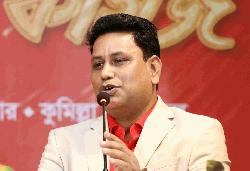 সাহসকে পুঁজি করে সুন্দর আগামীর স্বপ্নে বিভোর ‘দৈনিক কুমিল্লার কাগজ’ সম্পাদক আবুল কাশেম হৃদয়
 কুমিল্লার জগন্নাথপুরে যখন রথউৎসব হতো তখন হাতির মিছিল হতো
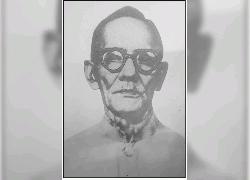 স্মরণে অনাথ বন্ধু মজুমদার কুমিল্লার এক নিঃশব্দ স্থপতি